Showing posts with label bee video. Show all posts

Tuesday, April 10, 2012

Honey for Maya- a film by Stephen Buchmann

Mr. Buchmann is wanting to turn this into a full length film

“Deep in the rainforest of Mexico's Yucatan peninsula, in the shadow of his ancestors' great stone pyramids, one of the last Mayan beekeepers guards an ancient secret. It was passed on to him directly from his fathers in the Mayan language from long before the time of Cortez. He is one of very few modern Maya upholding the beecraft skills of keeping stingless bees. All is unveiled as Emmy award-winning cinematographer Keith Brust (Planet Earth, etc.) takes us deep inside the bees' hidden world and this ages old Mayan tradition for the first time.
Producer, director, copyright holder: Dr. Stephen Buchmann The Drylands Institute, Tucson, AZ and International Coordinator, The Pollinator Partnership (www.pollinator.org/) Email: (buchmann.stephen@gmail.com)
Cinematography: Keith Brust, Wildtime Media, Tucson, AZ
Editing: John Hadwin, Reelworthy, Inc., Tucson, AZ
Scientific Advisors: Dr. Rogel Villanueva Gutierrez, ECOSUR, Chetumal, QR, Mexico. Dr. David Roubik, Smithsonian Tropical Research Institute, Panama City, Republic of Panama.
I'm actively fund-raising to finish filming and post production, expanding this 7 minute teaser into a full-fledged 50 minute documentary for US and worldwide television broadcast. If you are an interested funder, foundation officer or know someone who is, please contact me by email. I would like to finish this project before Dec. 21, 2012. Not much time left. :-) “

buchmann.stephen@gmail.com

Stephen Buchmann

entomologist

Tucson, Arizona, USA


I can’t imagine the thrill it must have been to witness this ancient art of keeping bees this way in person! I thought I would share this film in the hopes others might be interested in donating to get this film completed and also as it is just so very beautiful and interesting:)

Of the 500 or so species of stingless bees in the tropics, the Maya beekeepers favorite has been Melipona beecheii. The bees traditional name is xunan kab ( or kolil kab in the Mayan Language), means Royal Lady.

From a press release by the Smithsonian Tropical Research Institute:

Long before Europeans brought honey bees (Apis mellifera) to the Americas, Mayan bee keepers harvested honey from the log nests of stingless bees native to tropical forests. Now, colleagues from the Colegio de la Frontera Sur in Quintana Roo, Mexico and the Smithsonian Tropical Research Institute (STRI) warn of the imminent demise of stingless bee keeping on the Yucatan — a result of ongoing cultural change and habitat loss.
"In our initial surveys of bee keepers working with native bees in the eighties, we estimated that they maintained more than a thousand active hives. In 1990, we only found around 400 hives, and in 2004, only 90. At this rate, we would expect the art of stingless bee keeping to disappear from the Yucatan by 2008." David Roubik, once dubbed "The Bee Man" in a National Geographic special about his work on Africanized bees, and recently featured on the PBS "Deep Jungle" series, would like people to take note:
"For thousands of years, Mayans were expert practitioners of bee husbandry, and honey was an essential forest resourceĆ¢€¦as a sweetener, as an antibiotic and as an ingredient in the Mayan version of mead. The Mayans, like other tropical forest cultures, worked with large-bodied meliponine bees that produce a variety of honeys. Their favorite, and one of the most productive species, has been Melipona beecheii, 'Xunan kab', which means, literally, 'royal lady'."
Of the 500 or so species of stingless bees in the tropical world Melipona beecheii is unique in that it was routinely propagated. Mayan bee keepers divided existing hives in order to increase the number of hives and honey production. "That technology is all but lost, but we'd like to see it turned around, not only to ensure the survival of meliponiculture as a way of life, but also to build up breeding stock to be re-introduced into the wild where bees play an important role as pollinators," Roubik explains.
But beekeeping is fast becoming a global monoculture. Africanized honey bees produce more honey, and therefore are an economically attractive option for bee keepers. In the Mayan tradition, a priest harvested stingless bee honey as part of a religious ceremony twice a year. Over harvesting kills the colony. Native bees may simply starve as deforestation, forest fragmentation and hurricanes reduce the availability of the floral resources they need.
Finally, most of the bee keepers on the Yucatan are old men living in rural areas where no one inherits their knowledge of the fine points of meliponiculture, specifically, how to propagate bees by dividing nests. Earlier this year, Rogel Villanueva-Gutierrez, first author of the paper, with Stephen Buchmann, Arthur James Donovan and Roubik published an amply illustrated handbook, in Spanish and Mayan, with step by step instructions for basic stingless beekeeping.


MayanBooklet

The Mayans believed that bees had cardinal virtues. Prudence, Temperance, Justice and Fortitude. They were also treated as deity. For more information about this, I suggest checking out this link!

And a good National Geographic article

And a very beautiful beehive altar

Honey and Herbal hugs to all who visit Comfrey Cottages xx

Saturday, March 31, 2012

Queen of the Sun – What are the Bees Telling Us?

queen of the sun
I requested the movie, Queen of the Sun, through our interlibrary loan system to bring to this months beekeeping meeting to share. We were all quite moved by this  profound, film about the global bee crisis from Taggart Siegel, director of The Real Dirt on Farmer John. 

Queen of the Sun
The gentleman in the blue shirt you see at the beginning of the trailer is Gunther Hauk, a biodynamic beekeeper. He and his wife own Spikenard Farm and Honeybee Sanctuary in Virginia in the US. I really enjoyed his view. “ Colony Collapse Disorder is the bill we are getting for all we have done to the honeybee.. It is just a name we give the phenomenon where a a hive is found empty. There is food and honey but the bees are gone… The problem will not be solved by killing a virus, or a bacteria, or fungi because the problem is an inner one…. I am grateful for a crisis. The crisis will give us the possibility to learn something if we are willing. If the heart opens enough to tell the mind something…”
Grateful?! What a wonderful way to view this problem! I am so inspired by him as I am constantly trying to do this myself, find the positive in the negative. He is right. We have been determinedly moving toward destruction with our agricultural practices, and other non earth friendly activities,  but if we can all stand together, as a hive functions, as one super organism, we can instigate change to save the bees and ourselves. Each of our own individual choices and actions can contribute to the good of our planet.
Yvon Achard, a beekeeper and Bee Historian in Grenoble, France, is the gentleman who is beekeeping shirtless and tickling them with his moustache. Michael Pollan, who wrote the Omnivore’s Dilemma, Carlo Petrini, president of Slow Food, and Michael Thiele of The Melissa Garden Honeybee Sanctuary are amongst some of the people interviewed in this film.
queen of the sun
I suggest this as an excellent film for everyone to watch. It is not about just preaching to the choir for all of us who are concerned and trying to instigate change for the bees, it is also an uplifting, positive, forward thinking movie with excellent ideas, photography, interviews, and positivity! On the main website there is a link for instant viewing and suggestions to host a viewing party. I encourage you all to do either or both of those ideas!
Last night as I lay sleeping
I dreamt-marvelous error!
That I had a beehive
here inside my heart.
And the golden bees
were making white combs
and sweet honey
from my old failures.
Antonio Machado (1875- 1939)


On the Queen of the Sun webpage, they have links for several ways to watch this movie instantly online using Amazon, !Tunes or Vudu. Click here to be taken to that page.


Honey and Herbal Hugs to all who visit Comfrey Cottages xx

Saturday, March 24, 2012

Balyolu: The Honey Road

I recently learned of Balyolu through Elizabeth Gowing’s blog, One Hundred Days of Honey. ( I recently wrote about Elizabeth’s book, Travels in Blood and Honey, Becoming a Beekeeper in Kosovo)


Balyolu (pronounced "Ball-yole-ew") The Honey Road, is the first honey tasting walking journey of its kind. The program is led and inspired by local women who are training to become world-class beekeepers & rural entrepreneurs.

An inspirational young woman named Catherine Jaffee, is the thrust behind this first of its kind adventure, Balyolu, The Honey Road in North Eastern Turkey. This is Cat’s story, of how she went to Turkey to research women and rural migration. Her blog fills in the rest of her story and how she  developed the idea of Balyolu. I invite you to cruise around her blog and really enjoy the pictures and stories of this lovely adventure. Balyolu is on my life list now!

Honey and Herbal Hugs to all who visit Comfrey Cottages xxx

Wednesday, February 29, 2012

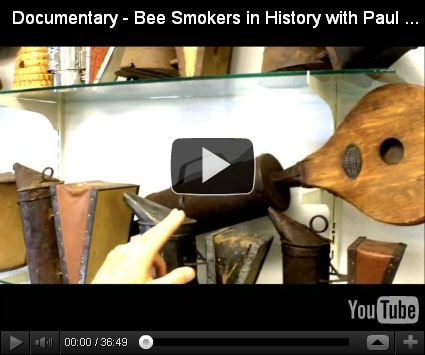
Bee Smokers in History – A Documentary Video with Paul Jackson

I thought since I had just written about using herbal marc/leftover for the bee smoker, some of you might be interested in this video about the history of bee smokers.

Hugs to all who visit Comfrey Cottages xxx

Wednesday, January 19, 2011

When the Bees Are Vanishing….

…We should all be informed. I am writing this blog post today, in hopes of reaching my readers with the message, it is time to act. Not just read about this atrocity committed on our world, but to understand, be versed in, and be prepared to do your part. It doesn’t matter where in the world you live, this an important global issue.

I am certain most of you have at least become aware, that there was a leaked document, that showed the United States Environmental Protection Agency, was doing anything but protecting our environment and us,  when they allowed bee-toxic pesticide usage, despite their own scientists report. For those of you who have not already been made aware of this, I invite you to read this article, and the document itself, (there is a link to the document in the article).

This video, is the beekeeper/ document leaker, Tom Theolbold, telling us about how the EPA ignored warnings about the use of chlothianidin, a pesticide produced by Bayer that mainly is used to pre-treat corn seeds. The pesticide is used on corn, canola, soy, wheat, sunflowers and sugar beets also.

So what can we do? Those of us who do keep bees, need to do so naturally. Those of you who have been thinking about keeping bees, get started. They and we need all the help possible to increase their population. As Tom says, be informed, talk about it, be aware. Make some noise people. Share this with your friends and family. We are not just talking about the fate of the bees, but the fate of our world, as we know it. Do it for the future generations.

I invite you all to sign the petition, to urge the EPA to remove chlothianidin from the market.

Chlothianidin has already been banned in the countries of Slovenia, German, France and Italy. This toxic chemical needs banned worldwide.

I also invite you to read this link and see how the company Bayer AG (the makers of Chlothidanidin) , is involved in GMO’s, and many other environmental dangerous interests. Scary to read of how much money this company spends on lobbying and contributions to political parties. They should be banned from doing so. I consider them traitorous  to the entire world.  Please join with me in boycotting any product from this company. Search for alternative products, if you find that you customarily do use their products. Become informed on which products they do produce or subsidize. This is a list of some of the key products they have.

Thank you for the time and consideration you put into this subject. It affects us all.

Bright Blessings to all who visit Comfrey Cottages xx


Sunday, October 25, 2009

A video of feeding honey back to the bees:)

thought it might be fun to film the bees enjoying their tribute today. many people say not to do this as it can encite robbing and fighting amongst the bees. i hope this video shows that this is not the case with my bees. they have a riotous, joyful time and the house bees waiting for them in the hive are just vibrating when they receive the honey from the forager bees! i can not only sense through seeing their behaviors, my own being vibrates and glows right along with them! i realize that laying out these combs like this invites other creatures big and small and would not be able to safely do this in a more rural setting. as it is, i put up the frames at dark and re-give them during the daylight hours. i have done this for several years without mishap. something you would have to decide for yourself if you chose to feedback honey the way i do it. i let them be like the bear and glut their fill before winter and then offer it to them this way again in the spring, to help strengthen them. i consider it a gentle, organic way to feed my bees.  enjoy, they and i most certainly did!