The second part of my theoretical task for January, with my Springfield Sanctuary Apprenticeship, is to research the different types of cough, (wet/cold, hot/dry, spasms, nervous, pharmaceutical side effects). Then tell which herbs I would use for each type of cough and why.
A productive cough produces a lot of mucous (sputum) or phlegm. The mucous may have drained from the sinuses or nose, down the back of the throat and up from the lungs.
There are many causes of a productive cough such as,
Viral illness, as in the common cold. The mucus drains down the back of the throat triggering coughing. Postnasal drip.
Infection. An infection of the upper airway passages or lungs. The productive cough may be a symptom of bronchitis, sinusitis, tuberculosis or pneumonia.
Chronic lung disease such as in COPD, chronic obstructive pulmonary disease. The productive cough could be a sign this disease is getting worse or there is an infection.
GERD, gastroesophageal reflux disease, can cause productive coughing which may awaken you from sleep. Stomach acid backs up into the esophagus.
Smoking or other tobacco use can cause a productive cough. A sign of damage or irritation to the esophagus, throat or lungs.
Nonproductive cough
A nonproductive cough does not produce sputum and is dry. Often developing toward the end of a cold or after exposure to an irritant, like smoke or dust.
Various causes of nonproductive cough
Viral illness. A dry cough may last for several weeks after a common cold. Often worse at night.
Bronchospasm, especially common at night. May be caused by irritation, causing bronchial tube spasms.
Allergies may cause a nonproductive cough. Often accompanied by sneezing.
Ace inhibitor medicines, used to control high blood pressure. Examples are captopril (Capoten), lisinopril (Zestoretic, Zestril, Prinivil)
Work environment fumes, chemicals and dust.
Asthma
An inhaled object, such as food, or small object.
Nervous cough also called Habit Cough. Correlated with stress.
Herbal Helpers for Coughs
Angelica root– Angelica Archangelica- Warming and and stimulating to the lungs. Helpful expectorant for cold, stuck phlegm
Anise seed-Pimpinella anisum- Breaks up congestion, eases coughs. Useful expectorant for stuck phlegm.
Asafoetida root- Ferula asafoetida –Ayurvedic medicine teaches us this herb is good for nervousness and spasmodic coughing.
Cayenne – Capsicum frutescens – very hot, pungent and drying, antiseptic and antibacterial. I don’t know if there is science behind this theory of mine, but if I have a spasmodic, tickly kind of cough in my throat, a pinch of cayenne in water will stop it in it’s track. I wonder if it is because a counter irritant action similar to what happens when I use cayenne to stop the itch of shingles..does it suppress the chemical impulse that sends the message to the brain to cough? Don’t know but it works.
Cherry – Prunus avium. P. serotina – antitussive, and anti inflammatory. Useful especially in dry and irritating coughs. Bronchitis. Bark, twigs and fruit and stems of fruit are all useful.
Chickweed, Stellaria media – Her saponins work at a cellular level increasing absorption and permeability. The lungs are helped by the saponins to absorb healing nutrients and to remove the wastes and blockages more readily.
Coltsfoot, Tussilago farara – Tussis is cough in the Latin language. Used for all sorts of coughs, but especially for moistening a irritating, hacking dry cough and loosening phlegm for expulsion. Stimulating expectorant for tight chest and thick phlegm. Anti- spasmodic. Combine with thyme and elecampane for persistent coughs. Make it into a syrup and it is more moistening than the tincture or tea.
Comfrey – Symphytum officinale - Mucilaginous for tight, dry, irritated cough
Elderflower – Sambucus nigra – Beneficial in hay fever/allergy combined with nettle tops. Elderflower helps breaks up congestion and soothes inflammation of the upper respiratory tract. Can be used with coughs that are productive too. Antiviral, anti-catarrhal
Elecampane – Inula helenium-Stimulating expectorant, decongestant, anti-inflammatory. Respiratory tonic to ease asthma and bronchitis. Expectorant and antiseptic. Can be taken long term to help heal in chronic conditions.
Eucalyptus – Eucalyptus globulus- in a diffuser or used with a vaporizer or in a pot of steaming water, the essential oil helps break up congestion, and calm spasmodic coughing. Fights infection. Useful made into a salve to spread over the chest and back (the lungs) to help with moving mucus.
Fennel seed – Foeniculum vulgare -Sedating expectorant. Helps loosen congestion and make a cough more productive. Calms the dry, hacking cough of bronchitis. Also good for nerves, so calming to the body under stress of the condition causing the cough. Good for the nervous or habit cough.
Garlic- Allium sativum- Stimulating and warming expectorant for congested bronchial and catarrhal, ‘cold’ chestiness. Antibiotic and antiviral sulfur compounds help break up stuck mucus.
Ginger- Zingiber officinale- Anti-inflammatory, warming expectorant. natural antihistamine
Goldenrod- Solidago ssp.- It is a drying, astringent, anti-catarrhal, and anti-inflammatory for mucous membranes.
Horehound – Marrubium vulgare- Sedating expectorant. Useful in continuous coughs with gagging and choking. Demulcent, anti-spasmodic. Mixes well with peppermint, or catnip
Horseradish – Amoracia rusticana – Hot and pungent and stimulating. Good to thin mucus congestion for both the sinuses and lungs so it can get eliminated. Gets the digestion warmed and going too, which is beneficial as a cold, sluggish digestion system can contribute to cold/wet mucus coughing.
Hyssop – Hyssopus officinalis-Stimulating,warming expectorant, anti-viral useful in coughs from the flu, colds, bronchitis, mild asthma. A nervine. Useful for thin watery phlegm and coughs associated with bronchitis. Similar action to horehound but less bitter. Mixes well with peppermint or catnip. Good as a tea or steam inhalant
Lavender – Lavandula ssp. - Sedating expectorant. Helps you relax and sleep
Licorice root- Glycyrrhiza ssp. – anti inflammatory, cooling expectorant, demulcent, antitussive
Lime, Linden, or Basswood here in the U.S. – Tilia ssp. – Calming and relaxing, helpful in a cough that keeps you awake with bronchospasms.
Lobelia- Lobelia inflata – stimulant to the respiratory system and expectorant.
Mallow- Malva sylvestris – Marshmallows cousin. Demulcent, soothing to inflamed tissues with a dry cough.
Marshmallow – Althea officinalis- Demulcent and soothing to inflamed tissues with a dry cough. Useful for coating the mucus membranes in the GERD type of coughs. Expectorant
Mint – Mentha ssp. – Mints have dual energetic patterns of both cooling and heating, stimulating then soothing. I use catnip, Nepeta cataria, usually for the children, or peppermint, Mentha piperita, when formulating cough formulas. I recommend it for those dry, hacky, spasmodic coughs. Mints have an anesthetizing quality that helps calm them. Mints are decongestant and anti-inflammatory. Teas and steam inhalation both work well.
Mullein – Verbascum ssp. – Dry, irritable coughs and that tickle in ones throat. Cooling and astringent for thick, hot catarrh.
Nasturium – Tropaeolum majus- flowers and leaves have antimicrobial sulfur compounds. A good anti-catarrh recipe I use from James Wong is to make a nasturium and garlic clove vinegar for easing congestion.
Nettles, stinging nettles – Urtica dioica – Nettles have an antihistamine effect that make them invaluable for allergic reaction/ hayfever/ mild asthma coughing.
Onion – Allium cepa and cultivars- Onion honey syrup or onion poultice. The antibiotic and antiviral sulfur compounds ease inflammation, and help break up stuck mucus. Expectorant
Peach leaves- Prunus persica- Bronchitis, whooping cough. It’s a sedative and antispasmodic. Can help calm the dry, constant cough. Combines well with red clover, passionflower or wild lettuce to make an even more powerful medicine.
Pine- Pinus strobus, P. palustris and other spp. – Pine needle tea, pine resin tincture or just chewing on a piece of resin can help get stuck, thick mucus moving. Strongly antibacterial, it increases the effectiveness of the coughing and then helps halt it. Put some fresh pine needles in a pot of steaming water and inhale the vapors for use as a decongestant.
Plantain – Plantago major, P. lanceolata – Good for hot, dry coughs. Bronchitis, and the cough that lingers after a cold. Demulcent and has an antihistamine effect which helps hayfever/allergies. Combines well with mint and elderflower. Clears heat and inflammation. Stimulating expectorant.
Pleurisy Root, Butterfly Weed - Asclepias tuberosa – I have been finding myself adding this native plant to many cough formulas. I like it that much. Eases inflammation and is a stimulating expectorant. Good for wet coughs due to upper respiratory infection. Stimulates the lymphatic system circulation, especially around the lungs. Can be used to induce sweating during a fever. Coughs can aggravate the lining around the lungs, called pleurisy, a painful condition this herb is used traditionally to treat.
Rabbit Tobacco, (Life Everlasting, Cudweed ) – Gnaphalium obtusifolium – useful in coughs with bronchial spasms, asthma , dry coughs, stimulating expectorant.
Red clover- Trifolium pratense – Blood cleansing and improves elimination. Useful in moving mucus out of lungs. A soothing expectorant and anti inflammatory useful in bronchitis and other coughs. (caution, if you are on blood thinners consult your physician or health care provider)
Red poppy – Papaver rhoeas – Soothing, sedating, helps sleep. Soothes a hacking cough. Useful for a cough that keeps you awake or is spasmodic or irritating.
Rose – Rosa ssp. – Cooling, supports immunity, helps elimination. Helpful for coughs with cold or the flu and for chesty coughs where the mucus seems stuck. Useful also in case of a cough associated with grief. I would recommend it to someone that had a nervous cough, also.
Sage – Salvia officinalis – Loosens phlegm in the upper respiratory tract making it easier to expel. Use it in a pot of water and inhale the vapors, inhalation, or just drink as a tea.
Slippery Elm – Ulmus fulva – Coats and soothes inflamed tissues. Especially useful in hot/dry coughs. Also helpful in the GERD type of coughs.
Sweet Gum bark – Liquidambar styraciflua – Gentle expectorant. Combines well with lobelia, which relaxes the bronchial tubes and allows the sweet gum to move the mucus out. Combines well with ginger, wild cherry, hyssop, rabbit tobacco, and mint .
Thyme- Thymus vulgaris – For immune building. Bronchitis, lung infection coughing. Antiseptic, antibiotic, expectorant. Combines well with plantain.
White deadnettle, Archangel – Lamium album –It’s mild astringency is useful for coughs with phlegm and catarrh.
Wild ginger- Asarum canadense - Stimulating expectorant. Helpful in digestion too,
Wild Lettuce – Lactuca virosa, L. serriola – Sedative and cooling. Soothing to dry, irritating coughs and whooping cough. Relaxes a spasmodic cough and helps one sleep.
Herbal Traditions and Coughs ( a few examples)
Traditional Chinese Medicine teaches us that many times grief, sadness, suppressed grief, feelings of lack of power all can manifest in the lungs. And that the lungs and large intestine are partnered in elimination. Things to look for is a cough with no direct cause, such as listed in the above section of productive and non productive coughs, might suggest to look at the emotional well being of the person with the cough and at their bowel elimination. I touched a bit on this with the GERD, but the subject goes deeper. Rose is one example that might be helpful and lung nourishing foods such as ginger, sweet potato, cabbage, onion, walnuts, pears, radish, black pepper, rice, radish, cinnamon, cardamom, miso, and leek, might be of benefit.
In the Tibb tradition, again we find a correlation between emotional character and temperament with breath. Also digestion being involved. Again a lengthy subject that I might expand at a later date. For now. an examples only. Roughness of the lungs from smoke or dust or loud shouting. Remove the person from the cause. Moisten the lungs with syrups, in equal parts, of barley and marshmallow; mix in a glass of water with 1/2 teaspoon of sugar and almond oil added. Each type of cough is treated differently and other modalities used besides herbs might include cupping, purgatives and emetics.
David Hoffman reminds us that one factor that can contribute to congestion is the mucus content of the diet. A build up of catarrh, mucus, are sites where metabolic waste and toxic material build up, so again, we see a connection with the digestion and coughs/mucus. He suggests with holding mucus forming promoters such as, dairy, eggs, grains, sugar, potatoes and other starchy roots.
Practical Task
Part of my practical task was to decoct some cherry bark and then mix in other herbs I feel appropriate for a cough syrup. Well, I used wild cherry bark in syrups frequently this winter when flu and colds brought coughs pestering my family and have one in my refrigerator right now! This one was for Lily, who had a viral infection with fever, hard coughing and copious mucus production, recently. It contains, wild cherry bark, horehound, rose, fennel, elderflower and I added a bit of pleurisy root tincture and chickweed tincture to each dose as given.
Remember, coughs are a natural process the body has to rid itself of irritants, such as mucus, so the goal isn’t always to suppress it. Try to use the herbs that will assist the body in doing it’s work of coughing easier. When a cough is hard on the person, it’s continual, spasmodic and they are getting weakened and can’t get restorative sleep, is the time to move on from the gentler helpers to the stronger ones.
I have discussed herbs I am familiar with using, but there are many others herbs useful for coughs. I might expand this at a further date as I learn more and use others, such as Skunk Cabbage, which does grow here, but I have not used yet.
Herbal and Honey Hugs to all who visit Comfrey Cottages
xx
resources:
David Hoffman – The Herbal Handbook, Holistic Herbal
James Wong – Grow Your Own Drugs
Hakim G. M. Chishti. N D. – The Traditional Healer’s Handbook
Rosemary Gladstar – Herbal Recipes for Vibrant Health
Penelope Ody – Complete Guide to Medicinal Herbs
Julie Bruton Seal and Matthew Seal – Backyard Medicine
Darryl Patton – Mountain Medicine
Michael and Lesley Tierra’s blog
WEBMD
Showing posts with label Springfield Sanctuary Apprenticeship Program. Show all posts
Showing posts with label Springfield Sanctuary Apprenticeship Program. Show all posts
Tuesday, February 5, 2013

Sunday, January 20, 2013
Skull Structure Study: Focus on Eyes, Nose, Sinuses, and Ears
 ( Courtesy of WikiMedia Commons )
The skull is the protective case for the brain and the organs of sight, taste, hearing, balance and smell. It has two main parts: the cranium or brain case and the facial bones. It is divisible into two parts :
the Cranium consisting of 8 bones which lodge and protect the brain. There names are:
Frontal, Parietal (2), Occipital, Temporals (2), Sphenoidal, Ethmoidal
and the Facial Bones which number 14:
Nasal (2), Maxillae (2) , Lacrimal (2) , Zygomatic (2), Palatines (2), Inferior Nasal Conchae (2), Vomer, and Mandible
For a total of 22 bones making up the structure of the skull.
The base of the skull is stronger and thicker than the top and sides, and has many openings for blood vessels, nerves and tubes to pass through. The facial bones enclose the front of the brain and form the openings for the eyes and nasal and oral cavities. The mandible is the only movable bone of the skull.
When you inhale air, it passes through a series of chambers and passageways that conditions, cleans and warm it before it reaches your lungs. The air first enters your body through two nostrils, which open into two large chambers, the nasal cavity. These cavities also contribute to resonance and timber of your voice. Explains why your voice sounds different when you are congested, doesn’t it ;^)
 (courtesy of WikiMedia Commons)
The sinus are a series of connected cavities in your skull. They are: The maxillary sinuses located in the cheekbones (#4), the frontal sinuses in the low center of the forehead,(#1) the ethmoid sinus which is between the eyes at the nasal bridge (#2), and the sphenoid sinuses,(#4) in bones behind the nasal cavity. As a group, these pairs of sinus cavities are known as the paranasal sinuses and each is named for the facial bones in which they appear. They are lined with a soft, pink mucosa, a thin layer of mucus.
Allergies, colds, pollutants and other irritants can cause problems with these sinuses and nasal cavity. The mucous production can become accelerated in an attempt to “wash out” these irritants from the body. The whole works can become inflamed, swell up thus blocking the mucous flow causing infection and impaction making the person subjected to all this headachy, congested, sneezy, runny nose, watery eyed and have plugged ears, amongst other things.
The ears, nose and throat are all connected by the Eustasthian tubes. That is why if you are having trouble with your sinuses, generally you might also have trouble with your ears and throat also! To help unplug by dissolving and removing this excess mucus, catarrh and phlegm, anti – catarrhal herbs include coltsfoot, fennel, hyssop, linden, sage, elderflower, cinnamon, and mullein.
For seasonal allergy problems, one of the best things is to use local raw honey year round. A tablespoon of organic apple cider and honey in a cup of warm water before going outside during the allergy season, works to block our bodies histamine reaction and helps with inflammation also. Nettles is excellent for this seasonal reaction. Eaten as a food, tincture of tea, an easy way to help ourselves. Essential oils that might help are Hyssop, Thyme, Cypress, and Peppermint.
Whether your sinus problems are due to allergies, a cold or other irritant, you might consider a simple tea blended from antihistamine, anti inflammatory herbs such as nettle, yarrow, elderflower, peppermint, hyssop and thyme when faced with a sinus inflammation or infection. A neti pot is useful during this time. Horseradish and wasabi are sure to unclog your sinuses and get things moving if you are plugged up. Fire cider is good way to support your immune system and counteract your bodies response to soothe things out.
Essential oils diffused that might be helpful include Eucalyptus, Lavender, Melissa, Chamomile, Hyssop, Peppermint, Sage or Thyme in a pot of boiling water or a vaporizor. Humidifying the air is helpful in itself. Just simmering some elecampane root, peppermint leaves or mullein leaves in a pot of water and inhaling the steam can help with congestion.
 ( courtesy of WikiMedia Commons)
The outer ear is made up of the pinna, the ear canal and the surface of the ear drum. Ear wax is produced in the outer portion of the ear canal.
The middle ear is an air-filled cavity behind the ear drum, )tympanic membrane) and includes the three ear bones, the ossicles which are the malleus (or hammer), the incus (or anvil), and the stapes (or stirrup). The opening of the Eustanchian tube is also within the middle ear.
The inner ear includes both the organs of hearing, the cochlea and the labyrinth or vestibular apparatus, which is attuned to the effects of both gravity and motion. The other parts of the inner ear consists of three semicircular canals and the vestibule. The inner ear is protected by the hardest bone in our bodies and this bone has fluid-filled hollows. The chochlea has three fluid filled spaces also. The scala tympani, the scala vestibuli and the scala media. the eighth cranial nerve comes from the brain stem to the inner ear. Sound strikes the ear drum, this movement transfers to the stapes, whose footplate presses into one of its fluid-filled ducts through the window of the cochlea. The fluid inside this duct is moved and flows against receptor cells in the Organ of Corti. These stimulate the spiral ganglion which send the information to the auditory portion of the eighth cranial nerve to the brain. Fluid in these canals and hairs cells within help with our balance.
When we are congested and have “plugged ears” anti-catarrhal herbs can help with this problem also. ( I listed several of these earlier.)
For ear infections a few drops of warmed garlic and mullein infused oils are very helpful in otitis media, or middle ear infections. Ear infections are common in children due to their smaller Eustachian tubes. If there is a suspicion of perforation of the ear drum, massaging this oil behind the ear might be helpful. These oils will help break up and wash out wax build up too.
External otis, or ear canal irritation happens sometimes to swimmers, especially. Prevention by making sure the ears are good and dry after swimming is important. Bend your head to the side and cup your hand against it and press creating a vacuum to help pull out excess water.
David Hoffman recommends for painful earache, Pennywort juice. Crush the leaves and sieve, collecting the juice. A couple of warmed juice drops placed in the affected ear with a cotton ball plug might be helpful. He also recommends Lobelia tincture the same way. Or if none of these are available , a couple drops of warmed infusion of Chamomile, Yarrow or Hyssop.
Tinnitus is another condition which can affect the ears. Likened to having the sound of crickets constantly playing in your head. Sometimes caused by exposure to too much industrial noises and others times by catarrhal congestion. Hoffman recommends Golden Seal and Black Cohosh for either cause taken as a tea or capsule over time.
Whether it is your sinuses, ears or head that aches with a cold or sinus infection, a lavender fomentation might be helpful to relieve the pain. Put some cold water in a bowl and add some drops of Lavender Essential Oil. Soak a cloth in the liquid, wring it out and place on the painful area. When it warms up, repeat. The herbal constituents permeate tissue. Placed on the back of the neck these herbal actions go right into your central nervous system to calm down the inflammation associated with a sinus headache. Can also be used against your ears, or facial sinuses for relief.
 ( courtesy of Glaucoma Research Foundation)
The eye is protected by a tough, white covering called the Sclera. Part of the Sclera can be seen at the front of the eye when you look at it. A clear, delicate membrane called the conjunctiva covers it. The cornea is at the front of the eye. It is the clear part of the eye’s protective cover. The iris is the colored part of the eye. It contracts and expands so your pupil can let in the right amount of light. The pupil directs the light to your lens which focuses the light on the membrane at the back of your eye, the retina. Nerve fibers in the retina carry images via the optic nerve to your brain. The front part of the eye is filled with intraocular fluid or aqueous humor, which is a clear fluid made by the Ciliary body. The fluid flows out through the pupil and is then absorbed through the bloodsteam through the eyes drainage system. The drainage system is a series of canals around the outer edges of the iris. Tears are produced by glands, and are release through tear ducts outside the eye and moisten the outer surface of the eyeball. This keeps the eyes moist and washes away most debris.
Glaucoma is a condition where the drainage system of the eye can become clogged, the intraocular fluid can not drain and damage happens to the optic nerve and vision loss can occur. Unfortunately, this can also be an inherited condition.
Other conditions that can affect the eyes include conjuctivitis, an inflammation of the conjunctiva. This can occur as a side affect of a cold or hayfever, or environmental pollutants. Taking the aforementioned herbs for these conditions might help as well as using an Eyebright, Euphrasia officinalis,both internally, as it is a good decongestant and externally as a beneficial eyewash. You can also apply a Eyebright tea soaked cloth to your closed eyes for relief. Calendula might also be used the same way and for the same reasons.
Lots of accidents due to foreign objects hitting or getting blown into the eyes can occur also. For those of you with Facebook accounts, you might find this video by Sevensong Sevensong of interest on using an eye cup.
There are many other conditions and accidents that can happen to our skull and it’s parts, but these are just a few I chose to highlight for part of my Springfield Sanctuary Apprenticeship program, October/ November Task list assignments.
Herbal and Honey Hugs to all Who visit Comfrey Cottages xx
Tuesday, November 20, 2012
Learning about the Pancreas
As part of my Springfield Sanctuary Apprenticeship program I have been studying the pancreas. Having a daughter who is insulin dependant, made the subject even more intriguing….and personal.. not only for my daughter, but for all of us who seem to be having unexplained weight gain.. perhaps those of us who have never had a spare pound in our lives..
Where is the pancreas? It lies partially behind your stomach, with the other part being is nestled in the curve of your small intestine (duodenum). It is in between your spine and stomach. It is buried deep and is non palpable. Hold your thumb to your little finger of your right hand, keep the other three fingers straight and upright, and then place your hand in the center of your tummy right below your lower rib, pointing the three fingers left. This is about where it is.
The parts of the pancreas are
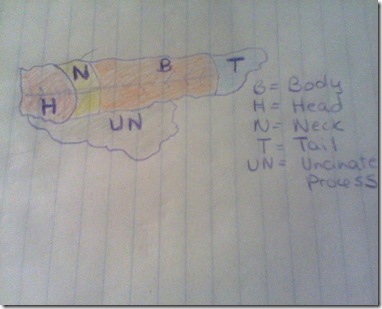
The pancreas is composed of a system of ducts and glandular tissue. The Pancreatic duct is the main duct and runs the length of the pancreas. It drains the pancreatic fluid from the glad and carries it to the duodenum/small interesting. This main duct has many small side branches and itself is only about 1/16 of an inch. The pancreatic duct joins with the bile duct to form the ampulla of Vater. This a widening of the duct right before it enters the duodenum/small intestine.
We can think of the pancreas as having different functional components, the exocrine and the endocrine parts. The Islets of Langerhan are the endocrine (endo=within) cells of the pancreas secrete and produce hormones into the bloodstream. Insulin and glucagon, the pancreatic hormones, work together to keep the levels of sugar in the blood at proper levels. This sugar, called glucose, is used for energy by the body.
Acinar cells are the exocrine (exo=outward) cells that produce and transport enzymes that will leave the body through the digestive system. They are secreted in the duodenum/small intestine where they help in the digestion of food.
So the pancreas is an integral part of the digestive system. When the pancreas is functioning normally, when food is eaten the glucose and amino acids trigger the pancreas to secrete insulin. The insulin binds to cells and opens the pathway of the cell to open letting glucose, amino acids, nutrients and fats to enter. The cells then begins a process of converting these nutrients into energy. After these nutrients are cleared from the blood the pancreas stops producing insulin. Cells are covered in insulin receptors. These receptors can become resistant and create a condition known as Insulin Resistance. When the insulin can’t get glucose and nutrients into the cells the blood glucose levels remain high and the pancreas produces even more insulin. It is a vicious circle then. The blood stream is saturated with glucose, but insulin levels continue to rise and nutrients can not nourish the cells.
Profile of Insulin Resistance
Elevate triglycerides (>150) or depressed HDL cholesterol (<40 male <50 female)
Waist:hip ratio> or equal to 1 in a male, or waist >40
Waist: hip ratio > or equal to 0.8 in a female, or waist > 35
Abnormal glucose tolerance// Fasting glucose > 10
Why do people become Insulin Resistant?
Genetics (25% of cases)
A diet high in simple carbohydrates with a lack of protein
Lack of resistance exercise
Lack of Essential Fatty Acids
Lack of specific nutrients and trace elements
Too much stress
Lack of sleep
Insulin Resistance can cause difficulties loosing weight, increase your risk of some types of cancer, cause obesity, high cholesterol, hypertension,thrombosis, atherosclerosis, osteoporosis, hypothyroid, and increase risk of diabetes.
The cells in the liver are the first cells to become insulin resistant. The liver normally stores glucose in the form of glycogen. In Insulin Resistance, the liver doesn’t sense the presence of glucose and starts making more. This process is known as gluconeogenesis. This liver formed glucose is sent into the blood stream making the already high level of blood sugar, even higher. The liver then stops breaking down fatty acids and starts storing them instead.
White adipose tissue (WAT) is used for storing retrievable fat for energy around the abdomen. This WAT secretes Leptin, a hormone, which sends a signal to the hypothalamus in the brain, telling it that the fat cells are full and it is time to burn some. When the Leptin levels rise the pancreas is also signaled to stop secreting insulin. Leptin is secreted when insulin is binding to cells or when fat cells are full. But, when the levels of glucose and insulin in the bloodstream are high and there is an excess of fat around the abdomen there is a disruption in the the Leptin signal and Leptin levels begin to rise. This high levels of Leptin causes the pancreas and hypothalamus to become defensive and reduce the number of Leptin receptors. This condition is called Leptin resistance. With this disruption of the Leptin signals the person always feels hungry and the metabolism slows down fat burning. The pancreas secretes more insulin and the cycle continues.
The stomach walls secrete a hormone called Ghrelin. This hormone functions to send a signal to stimulate appetite when the stomach is empty. Growth hormone, which builds muscle, burn fat and to sensitize insulin resistant cells is also secreted in response to Ghrelin. But, in Insulin Resistance, the high levels of insulin and glucose disrupt the signal. The insulin levels continue to rise and Growth Hormone secretion is lessened. This having all these disrupted signals cause us to think we are hungry, even when we have eaten, and contributes to weight gain and not lean muscle building.
High levels of insulin promotes fibrinogen. This increases blood clotting and decreases PAI-1 which inhibits clot breakdown. Both of these factors greatly increase the risk of thrombosis, strokes and heart attacks.
Stress, lack of sleep and lack of exercise can contribute to Insulin Resistance. The adrenal glands secrete the hormone cortisol in response to stress on the body. When cortisol is release due to stress the liver secretes glucose as a form of energy. The glucose signals the pancreas to release insulin. When stress is prolonged the cycle continues and leads to Insulin Resistance. If a person is pre-diabetic, this presence of cortisol can cause diabetes. The cycle of high levels of insulin and cortisol can lead to adrenal exhaustion.
A person can develop hypothyroid, underactive thyroid, when blood levels of insulin are high. The thyroid hormones are less able to convert T-4 to T-3 hormones.
When bone cells become insulin resistant Osteoporosis is likely to occur. Insulin helps protect bones and breaking down and promotes collagen formation.
Growth hormone helps build lean muscle, burn fat and increases insulin sensitivity. Exercise increases the production of growth hormone. Insulin suppresses Growth hormone.
This Insulin Resistance, is also called Metabolic Syndrome, or Syndrome X. Herbalist Paul Bergner suggests this treatment. All three suggestions must be done simultaneously
Supplements the nutritional deficiencies:
60mg Zinc
800 mg magnesium
600-800 mcg chromium
B-100 complex- complete
Lots of antioxidants: Vitamin C, E, etc
L-carnitine, 500 – 4000 mg
Eat a low carbohydrate diet
Fish oil and flax oil while restricting others. Regular fish consumption is recommended.
Most days do a minimum of 15-20 minutes of resistance type exercise. Exercise that reaches the anaerobic phase.
Don’t smoke
Consult your physician before starting any diet or exercise program
Herbs that might be beneficial include fenugreek, cinnamon, Maitake mushroom and coffee
Herbal and Honey Hugs to all who visit Comfrey Cottages xx
sources: Paul Bergner’s writing and John Hopkins University website
Where is the pancreas? It lies partially behind your stomach, with the other part being is nestled in the curve of your small intestine (duodenum). It is in between your spine and stomach. It is buried deep and is non palpable. Hold your thumb to your little finger of your right hand, keep the other three fingers straight and upright, and then place your hand in the center of your tummy right below your lower rib, pointing the three fingers left. This is about where it is.
The parts of the pancreas are

The pancreas is composed of a system of ducts and glandular tissue. The Pancreatic duct is the main duct and runs the length of the pancreas. It drains the pancreatic fluid from the glad and carries it to the duodenum/small interesting. This main duct has many small side branches and itself is only about 1/16 of an inch. The pancreatic duct joins with the bile duct to form the ampulla of Vater. This a widening of the duct right before it enters the duodenum/small intestine.
We can think of the pancreas as having different functional components, the exocrine and the endocrine parts. The Islets of Langerhan are the endocrine (endo=within) cells of the pancreas secrete and produce hormones into the bloodstream. Insulin and glucagon, the pancreatic hormones, work together to keep the levels of sugar in the blood at proper levels. This sugar, called glucose, is used for energy by the body.
Acinar cells are the exocrine (exo=outward) cells that produce and transport enzymes that will leave the body through the digestive system. They are secreted in the duodenum/small intestine where they help in the digestion of food.
So the pancreas is an integral part of the digestive system. When the pancreas is functioning normally, when food is eaten the glucose and amino acids trigger the pancreas to secrete insulin. The insulin binds to cells and opens the pathway of the cell to open letting glucose, amino acids, nutrients and fats to enter. The cells then begins a process of converting these nutrients into energy. After these nutrients are cleared from the blood the pancreas stops producing insulin. Cells are covered in insulin receptors. These receptors can become resistant and create a condition known as Insulin Resistance. When the insulin can’t get glucose and nutrients into the cells the blood glucose levels remain high and the pancreas produces even more insulin. It is a vicious circle then. The blood stream is saturated with glucose, but insulin levels continue to rise and nutrients can not nourish the cells.
Profile of Insulin Resistance
Elevate triglycerides (>150) or depressed HDL cholesterol (<40 male <50 female)
Waist:hip ratio> or equal to 1 in a male, or waist >40
Waist: hip ratio > or equal to 0.8 in a female, or waist > 35
Abnormal glucose tolerance// Fasting glucose > 10
Why do people become Insulin Resistant?
Genetics (25% of cases)
A diet high in simple carbohydrates with a lack of protein
Lack of resistance exercise
Lack of Essential Fatty Acids
Lack of specific nutrients and trace elements
Too much stress
Lack of sleep
Insulin Resistance can cause difficulties loosing weight, increase your risk of some types of cancer, cause obesity, high cholesterol, hypertension,thrombosis, atherosclerosis, osteoporosis, hypothyroid, and increase risk of diabetes.
The cells in the liver are the first cells to become insulin resistant. The liver normally stores glucose in the form of glycogen. In Insulin Resistance, the liver doesn’t sense the presence of glucose and starts making more. This process is known as gluconeogenesis. This liver formed glucose is sent into the blood stream making the already high level of blood sugar, even higher. The liver then stops breaking down fatty acids and starts storing them instead.
White adipose tissue (WAT) is used for storing retrievable fat for energy around the abdomen. This WAT secretes Leptin, a hormone, which sends a signal to the hypothalamus in the brain, telling it that the fat cells are full and it is time to burn some. When the Leptin levels rise the pancreas is also signaled to stop secreting insulin. Leptin is secreted when insulin is binding to cells or when fat cells are full. But, when the levels of glucose and insulin in the bloodstream are high and there is an excess of fat around the abdomen there is a disruption in the the Leptin signal and Leptin levels begin to rise. This high levels of Leptin causes the pancreas and hypothalamus to become defensive and reduce the number of Leptin receptors. This condition is called Leptin resistance. With this disruption of the Leptin signals the person always feels hungry and the metabolism slows down fat burning. The pancreas secretes more insulin and the cycle continues.
The stomach walls secrete a hormone called Ghrelin. This hormone functions to send a signal to stimulate appetite when the stomach is empty. Growth hormone, which builds muscle, burn fat and to sensitize insulin resistant cells is also secreted in response to Ghrelin. But, in Insulin Resistance, the high levels of insulin and glucose disrupt the signal. The insulin levels continue to rise and Growth Hormone secretion is lessened. This having all these disrupted signals cause us to think we are hungry, even when we have eaten, and contributes to weight gain and not lean muscle building.
High levels of insulin promotes fibrinogen. This increases blood clotting and decreases PAI-1 which inhibits clot breakdown. Both of these factors greatly increase the risk of thrombosis, strokes and heart attacks.
Stress, lack of sleep and lack of exercise can contribute to Insulin Resistance. The adrenal glands secrete the hormone cortisol in response to stress on the body. When cortisol is release due to stress the liver secretes glucose as a form of energy. The glucose signals the pancreas to release insulin. When stress is prolonged the cycle continues and leads to Insulin Resistance. If a person is pre-diabetic, this presence of cortisol can cause diabetes. The cycle of high levels of insulin and cortisol can lead to adrenal exhaustion.
A person can develop hypothyroid, underactive thyroid, when blood levels of insulin are high. The thyroid hormones are less able to convert T-4 to T-3 hormones.
When bone cells become insulin resistant Osteoporosis is likely to occur. Insulin helps protect bones and breaking down and promotes collagen formation.
Growth hormone helps build lean muscle, burn fat and increases insulin sensitivity. Exercise increases the production of growth hormone. Insulin suppresses Growth hormone.
This Insulin Resistance, is also called Metabolic Syndrome, or Syndrome X. Herbalist Paul Bergner suggests this treatment. All three suggestions must be done simultaneously
Supplements the nutritional deficiencies:
60mg Zinc
800 mg magnesium
600-800 mcg chromium
B-100 complex- complete
Lots of antioxidants: Vitamin C, E, etc
L-carnitine, 500 – 4000 mg
Eat a low carbohydrate diet
Fish oil and flax oil while restricting others. Regular fish consumption is recommended.
Most days do a minimum of 15-20 minutes of resistance type exercise. Exercise that reaches the anaerobic phase.
Don’t smoke
Consult your physician before starting any diet or exercise program
Herbs that might be beneficial include fenugreek, cinnamon, Maitake mushroom and coffee
Herbal and Honey Hugs to all who visit Comfrey Cottages xx
sources: Paul Bergner’s writing and John Hopkins University website
Friday, September 7, 2012
Elder Tree Bark for Bruising
When I first became an apprentice of Sarah Head and joined her Springfield Sanctuary Group, last January, she assigned us the task of finding elder and harvesting the bark to make a salve for bruising. I wrote about harvesting elder bark and making the salve here. Now all we apprentices started furiously talking among ourselves, as none of us had ever heard of using elder bark for bruising, and Sarah kept quiet while we emailed back and forth and tried to figure out just why this would work. We all searched and search through old herbals and web sites and discussed the different constituents and all we could come up with was the fact it would be an anti inflammatory. Then I found in my book Indian Herbology of North America by Alma Hutchens where she referred to it for making a discutient ointment. Ah ha! Discutient herbs cause dispersal or disappearance of a pathological accumulation. So elderbark would cause the accumulated blood to disperse to be reabsorbed. Well I have proof of how well this works!
I recently took one hell of a fall. I was trying to step over a baby gate at my dad’s and when I went to place my foot on the floor on the other side, there was no floor! He has a sunken living room and I had forgotten! I went off balance, tumbling into the gate and onto the floor, knocking over a great pile of boxes they had stacked there, since they had just moved. Within a few short hours I had a horrible, swollen, hot, hurting bruise on my thigh! Being the empiricist I am, I decided to use only the elder bark salve on the bruise and document the progression of recovery. This photo is the second day after injury
 The pain and swelling had already gone down considerably and I was noting that this bruise never became as horrible as bruises usually do on my fair skin.
Bruise day 6. Amazing how the whole center of the bruise has became perfectly clear! The anti inflammatory properties had taken care of any pain completely.

Bruise day 9

I think a factor on the fact there is still darkish areas, is I had trouble reaching those places and didn’t apply it as well. But still, remarkable, don’t you think?
Bruise day 13
 Note all the perfectly clear skin! I was quite diligent to reach the hard to reach places and by the 15th day, there was absolutely no sign I had ever had an injury! Now I don’t know about you, but a bruise of this sort would have gone through a rainbow of colors during the healing process untreated and also would have been with me for well over a month. Truthfully, with my very fair skin, I would have seen it for closer to 6 weeks or longer without treatment.
So, I used the elder bark salve and have proven to myself that it is anti inflammatory and an amazing discutient. ( I am trying to figure out whether the word deobstruent would be appropriate also. A deobstruent herb is one that removes obstructions and allows the bodies fluids to flow. I am thinking yes. Any thoughts on this from my herbie friends would be appreciated.)As a side benefit of my treatment, I had a spider vein near this area, and I am continuing to experiment, but I am seeing it fade also. I will continue experiments with that aspect and start taking pictures, so I might have some adds about that to share with you in the future:)
Huge thanks to my mentor Sarah for teaching me about elder bark. Another usage for our wonderful elder tree with its myriad of miracle helping qualities!!
For those of you unfamiliar with elder and are trying to identify it in your local foraging area, I created this post. I know I will be harvesting more bark and making a lot of salve to keep on hand in my apothecary!
Herbal and Honey Hugs to all who visit Comfrey Cottages xx

Tuesday, April 24, 2012
Propagating a Rose Cutting with Honey
Rose is my number one ally with my Springfield Sanctuary Apprenticeship this year. Sarah asked us to start plants from seeds, etc. and since you can start a new rose bush from a cutting from an established one, I started exploring this. I found many sources suggesting using a rooting compound, and I will try that on another cutting, but today, I decided to try to root a cutting by dipping it in honey and then water. This is the video that inspired me to try this environmentally friendly way to root a rose cutting:)
 I have admired one of my daughter’s neighbor’s roses, and decided to use a cutting from it, with permission.
I do not know this roses name, but it has lovely pink roses that repeat bloom from spring to very late in the fall and has lots of lovely rose hips every year. I will let you know how this method works in a few weeks! I will try another cutting using rooting compound and see if I can discern a difference on the success or (perish the thought!), the failure!
Herbal and Honey Hugs from all who visit Comfrey Cottages xx
starting a rose bush from a cutting
I do not know this roses name, but it has lovely pink roses that repeat bloom from spring to very late in the fall and has lots of lovely rose hips every year. I will let you know how this method works in a few weeks! I will try another cutting using rooting compound and see if I can discern a difference on the success or (perish the thought!), the failure!

Herbal and Honey Hugs from all who visit Comfrey Cottages xx
Saturday, March 31, 2012
Acne and Eczema – Springfield Sanctuary Research Task
As part of our research on the function of skin and blood, we were asked to look at why people develop acne and eczema, and to explore which herbs might be helpful.
Acne occurs when hair follicles become plugged with dead cells and oil. As we learned earlier, hair follicles are connected to sebaceous glands. These glands secrete sebum, an oily substance which lubricates your skin and hair. Sebum normally travels up the hair follicle and out onto the skin, but when there is an excess of sebum or dead skin cells, these can plug up the end of the hair follicle and form a soft plug where bacteria can thrive.

This plug may cause a whitehead (closed comedone) by producing a bulge in the follicular wall. A blackhead (open comedone) is formed if this plug is exposed to air. Blockages that occur deep on the hair follicle produce cysts. Pimples occur when these blockages become infected or inflamed. Hormones, certain medicines (such as androgens, lithium, and corticosteroids ), and diet may all trigger or aggravate acne. Overactive sebaceous glands may cause acne. We might see acne on the face, head, chest and back if this is the case. Contact irritants such as laundry soaps, dryer sheets, soaps, lotions etc may cause or aggravate acne. Experiment with removing or changing these products, especially if you use fragranced ones.
I do want to share what I learned about acne that develops in adult women may be a sign of pregnancy, polycystic syndrome or rarely Cushing’s Syndrome, so things to be aware of. It is not uncommon for acne to be related to normal hormone fluctuations related to menstrual cycles, or puberty.
Possible Herbal Helpers for Acne:
My friend Helen Compton, was a consultant on this timely article about using Thyme is the treatment of acne.
My dear friend Lucinda, suggest Viola may be of benefit in both eczema and acne in this post.
Other suggestions to help control or alleviate acne, could be:
Garlic oil to combat infection. Perhaps rub a cut clove on the affected area. Add garlic to the diet
Basil which you can apply the leaves directly, make a wash or apply the tincture with a cotton ball.
Tea Tree oil or Lavender oil ( anti-pruretic, or anti- itch, anti- inflammatory, antimicrobial) –diluted 1 part to 10 parts water and applied. Alternatively, a couple drops of either oil could be added to bentonite clay and a little water, and applied as a paste to draw out and dry up acne.
Cabbage is antibacterial and anti-inflammatory. Liquidize fresh leaves and witch hazel, strain, add 2 drops lemon oil and use as a lotion. ( Penelope Ody recipe)
Rose petals, to remove the heat. Use as a water infusion, a distilled rose water.
Calendula taken as an infusion or tincture may help with overactive sebaceous glands. As could borage, taken in the same way.
Sebaceous acne might be helped by combining peppermint and elderflower in a pot of water, brought to a steam and then used as a steam bath. Follow with a an astringent toner of witch hazel with yarrow flowers , which are anti-inflammatory and anti-microbial.
The cause of eczema is unknown. Atopic dermatitis is the most common form. Dermatitis refers to inflammation of the skin, but atopic refers to allergic tendency, which is inherited. While the atopic dermatitis is not cause by an allergy, eczema sufferers have a high risk of having or developing allergic conditions like hay fever or asthma. Typically eczema can cause skin to be red, dry, itchy, even cracked or leathery. Serum may even ooze from the raw patches. Crusts of this serum may form. Lesions may bleed. It tends to run in families (genetics). Stress, sweat, heat, wool, synthetic fabrics, and different soaps can all be triggers, as can an allergic reaction to pet dander, mold or pollen. Winter time low humidity, living in a dry climate, not lubricating after bathing, being too hot or too cold, all could be triggers. Makeup, chlorine, dust, the list seems endless of things that can trigger or aggravate eczema. Just having dry skin can worsen the condition. Perhaps an abnormally function immune system may be a cause.
Babies have a thick, crusty rash on their heads, which is sometimes referred to as a form of eczema and commonly called cradle cap. Studies suggest it might be related to a lack of biotin. Nursing mothers might eat more Swiss Chard, a good source of biotin. Externally, rosemary, burdock or heartease may be used as a wash. The nursing mother might consider drinking Violet leaf tea. Swiss scientist have suggested maybe massaging a small amount of borage oil onto the spots, and then gently brushing away the loosened bit.
Possible Herbal Helpers for Eczema:
My sweet friend Latisha shares her Eczema Dream Cream recipe featuring Hibiscus here. She also suggest Creosote bush.
Stellaria, chickweed, is demulcent and emoillient, refrigerant, a wound healer, blood cleanser and anti-itch and may be of benefit. May be used as a tincture, infusion, or in a bath using either the infused chickweed or chickweed vinegar added to the bath water. And of course, should be used in foods.
Borage oil, a source of gamma linolenic acid, an omega fatty acid and an omega 6 fatty acid, and essential fatty acid, may help by locking in moisture.
Evening Primrose contains essential fatty acids needed to maintain healthy skin. Take as a capsule or use as a simple.
Stinging Nettle, may help. It is astringent, a circulatory stimulant so is useful if poor circulation is a cause of the eczema, which is not uncommon as we age. It is also tonic. Take internally as an infusion or tincture or of course, as a food. Externally it can be made into a cream or ointment. Plantain may also be useful in this type of eczema.
Birch leaf tea
Other blood cleansing herbs such as red clover, cleavers, figwort, heartsease, yellow dock, dandelion and burdock may all be helpful in both eczema and acne. Use them as simples, as foods, in combinations with each other. Purifying your blood and system of toxins with these herbs may be of great benefit! Of course, Sassafras root bark is a great blood purifier also.
A non herbal helper for eczema to be considered might be light therapy.
In the book Herbal Medicine From the Heart of the Earth, Dr. Sharol Tilgner suggests this skin formula to help acne, eczema and other conditions which are indicated by dry, itchy, scaly skin. She also stress that the underlying condition be address, be it stressors, poor liver function, etc
Skin Formula
Burdock 30%- 45%
Oregon Grape 20% – 30%
Sarsaparilla 10% – 20%
Nettle 10% – 15 %
Horsetail 5% – 15%
This assignment has me perking my “ears” everytime I am reading one of my herbal folklore and ethnobotanical books now too! I think I will save some of those finding for another post in the future though, as they warrant a post of their own!
Herbal and Honey Hugs to all who visit Comfrey Cottages xx
Monday, March 12, 2012
Making Bitters – Springfield Sanctuary Task
One of our tasks has been is to create a digestive bitters. The taste of bitters stimulates saliva, digestive secretions, bile release and helps with appetite and digestion. Sarah has several entries on her blog about them, if you care to peek.The following is the recipe I chose to make for this task


Other happenings, I saw the first Robin bird last Friday! A true harbinger of spring around my home. Since then, the main flock is back and they are everywhere!
Dylan’s little chickweed container is growing. He has been able to munch them all winter, as it is in a protected spot. But we are seeing some new growth, along with a dandelion now.


Hugs to all who visit Comfrey Cottages xxx
Tuesday, February 7, 2012
Decorating with Rose and Comfrey

Rose and Comfrey are two of my allies I chose for my participation in the Springfield Sanctuary Apprentice program this year. Wanting to incorporate these lovelies in every way I could think of, in my life this year, I decided to redecorate the wall above my kitchen table.
The two rose prints I found at a yard sale many, many years ago. They were just so beautiful, I had to buy them. They have travelled with me through my life’s journey for at least 25 years now.


I have been enamored with learning the history of roses, and in particular, how they have received their names. In the course of pursuing this, I have had to learn new terms, such as “sport”, which refers to when nature pulls a genetic surprise and creates a new rose from another! I explain this term as it comes up in this bit I could find out about the Alfred K. Williams rose. Seems A. K. Williams is the sport of a French rose named General Jacqueminot, who was an offspring of Glories des Rosomanes and Geant des Batailles. From what I can figure out from different sources it was introduced in 1877! (1877 — Schwartz, France)
From The Garden: An Illustrated Weekly Journal of Horticulture and All Its Branches, March 24th, 1894:
A.K. Williams When this Rose was sent out in 1877 by Monsieur J. Schwartz it was considered to delicate a grower...However, now it has got over the strain of excessive propagation, I find it a fairly good grower and hardy....it has probably won the medal as bieng the best Hybrid Perpetual in the show oftener than any other Rose...it is one of the most perfect Roses of its type-imbricated...Deep carmine-red when first opening, changing to a more or less magenta hue with age, every flower bold and upright, with good lasting powers and exquisite fragrance...It is not so long-lived as many when grown upon the Manetti...the Brier stock gives a more lasting bloom, and is much the best for autumnal flowering. A.K. Williams is useful for forcing, making a near, compact plant, and carrying from three to twelve blooms at one time in a 6-inch or 8-inch pot.
and from the same magazines in 1882:
Rose (H.P.) Alfred K. Williams. This beautiful Rose was sent out by Schwartz, of Lyons, in the autumn of 1877, and flowered for the first time in my Rose garden the following summer. From the very first flower I...discovered that it was a Rose of great promise...A few complaints have been heard regarding its being a weak grower...misgivings to which I give no credit...I find it does well as a standard, and also on the Manetti, but I am inclined to think that the Brier is the best stock for it. Colchester. B. R. Cant...
In growth I should describe A.K. Williams as being between Duke of Wellington and Lord Macaulay....growth may be set down as moderate. The wood is thorny, the spines being what the rosarians call red. The form of the flower is perfect, being beautifully imbricated and of the brightest carmine-red...No Rose, if I omit Gloire de Dijon and La France, is more thoroughly perpetual....As regards constitution or durability, can it rank with Alfred Colomb...?I fear not...One great thing...is that it grows alike freely on Manetti, seedling Brier, and standard Brier.
(this information was found on this website)


Now the next one says Monsieurs E.Y. Teas and Jean Liabaud, two different roses in one pictures. From the same source I find scant information on either rose.
E.Y. Teas
Hybrid Perpetual. Pink. Strong fragrance. Blooms in flushes throughout the season. USDA zone 6b through 9b (default). Eugène Verdier fils aîne (1874)
Jean Liabaud:(1875 — Liabaud, France)
Hybrid Perpetual. Crimson, darker shading. Moderate fragrance. Large, full (26-40 petals), borne mostly solitary, in small clusters, cupped, scalloped bloom form. Occasional repeat later in the season. USDA zone 6b through 9b (default). Jean-Pierre Liabaud (1875).
The other picture I know exactly where it came from. A dear friend named Lucinda xx

Hugs to all who visit Comfrey Cottages xx
Thursday, February 2, 2012
Humoral Research – Springfield Sanctuary Handout
“ In the body the four elements ; Earth, Air, Fire and Water are known as the four Humours, and give rise to the four Temperaments; Melancholic, Sanguine, Choleric and Phlegmatic, respectively.”
Continuing with my January Springfield Sanctuary assignments. We were given a list of questions to read through, tick the statements that applied to ourselves, and get an overall picture of which humours we were dominant in. We then had ideas to implement, to help find our humoral balance.

These are my results:
Air/ Sanquine 16
Water/ Phlegmatic 13
Earth/Melancholic 10
Fire/Choleric 15
so a Sanquine/Choleric mainly
Now I see where Earth/Melancholic is the lesser of the humours, but... when you divide these up into body/physical aspects and mood/social aspects, it changes a bit.. which I found interesting, but I am hoping that by making the following dietary/ exercise,( I talk about at the end of this post), all will come more in line!
Body/ Physical
Air/Sanquine 10
Water/Phlegmatic 2 ( 1 of those an excess)
Earth/Melancholic 1
Fire/Choleric 8
big time Sanquine/Choleric body/physical
Mood/Social/Mind
Air/Sanquine 6
Water/Phlegmatic 10
Earth/Melancholic 9
Fire/Choleric 7 with 1
excess
so Phlegmatic/Melancholic mood/social!
Sanquines need to avoid excesses of all kinds, especially rich food, alcohol and sex. I suppose cutting back on butter… sigh, real butter and cookies, cakes and candy… never mind.. damp and heating foods such as honey, wine and mead… well I AM a beekeeper… so right, cut back on the honey… sigh, excess amounts of dried fruit, sugar, garlic and onion…. right then, butter, dried fruit, honey, sugar moderation.. use less…lots less
Do take, beer, cider, water, soups with barley, vinegar, pickles, wild meats, fish, salads and summer fruits…. I do adore cider and barley, use vinegar daily.. but can up that, wild meats, salad ok… summer fruits.. good thing I have some peaches canned, and some blueberries and raspberries frozen from last year. I don’t really like beer, and when I do drink, which is rarely, I do prefer mead, but since that is like once a year, inconsequential.
Eat regular meals and avoid eating between meals… ugh, schedule meals better, ok will do. Will have to think about how to not eat between meals, as I tend to be a grazer.
Useful herbs: calming and centering herbs; Chamomile, Linden, Oats. Anxiety;Valerian combined with Skullcap or Passion flower. Protect and balance circulation;Hawthorn berries and Bilberries
Do cultivate one person or find a central interest to life. Express that excess air by singing, writing or expressing ideas. Best stick with writing or the idea things…
Choleric people
Avoid; fatty and spicy foods, fatty meat, salty and dry foods, stimulants (coffee!), alcoholic spirits, excess wine and excess competitive sports… but forced inactivity will cause fire to burn out, leading to “burnt Choler” (examples: folks in retirement, students forcing themselves to sit and read long periods, thus neglecting their preferred sporting activity)
Take: fish and wild meats, beer and cider, soups with barley, summer fruits, water, regular exercise and vapor baths. Regular cleansing regimes such as short fast or eating only light foods for a few days.
Useful herbs: bitter herbs in general;cooling and softening herbs such as violets, mallows and plantain; herbs that clear heat from liver and digestive system such as Rhubarb root or Meadowsweet; herbs that clear heat from the skin, like Burdock root and Yellow dock; herbs to protect heart from heat like Motherwort and Lemon Balm; cooling sedatives like Wild Lettuce and Hops for insomnia or over excitability (Valerian might be too warm for Choleric people)
Cultivate respect for authoritative figure and exercise self discipline. Always have a project preferably one with clear aims that doesn’t take too long. Self discipline will come into play making the dietary and exercise changes!
I am thinking that if I make a few changes in my dietary and exercise routines, all 4 humors will come more in balance physically. I believe I will leave off that second cup of morning coffee and aim to just walk briskly around the neighborhood for 15 minutes or so in the morning. Get my husband to go fishing with me and add more fish to our diet, along with the wild game we have in the freezer. Add more blueberries, raspberries, drink more cider and use more of my Hawthorn or Motherwort vinegars. I guess I will try to limit my honey to mainly honeygars made with either of those two vinegars and also use those vinegars on salads and veggies. Make more clear soups, (another biggie as I prefer creamed soups), adding barley and Burdock root. Maybe the Wild Lettuce to ensure a good nights sleep, since I have an excess mark in my Choleric/Fire part… I think a tea I might enjoy that suits would be Chamomile, Linden, and Lemon Balm. I just made a Yellow Dock and molasses syrup, so maybe a spoon of that a day..And cut back on heavy, damp foods and stimulants! Less butter, less coffee and chocolate :(, less gravies! Leave off as many dried fruits and go for more fresh (well, my frozen/canned ones… I do adore dried fruit so this is a biggie). When spring arrives I can add fresh violets and summertime, fresh mallows. I have both as tinctures, but I don’t use tinctures a lot as I find them very warming… I have Meadowsweet tincture too, so maybe a Violet, Mallow, Meadowsweet and Dandelion tinctures mixture occasionally. Chamomile is a bitter herb, so that helps with adding bitters to the diet. I will add lots of dandelions, which are a bitter, when they start to appear, which shouldn’t be long the way our weather has been! I should order some more Dandy Blend, as that could be substituted for the times I typically want a cup of coffee. I like it plain with no sugar, so that would help with sugar intake also:)
Now since my mental/mood outcomes were almost completely opposite, I decided I might explore those things they suggest for those of us with a Phlegmatic/ Melancholic mind/mood.
Looking at Melancholic ideas, I get slapped in the head…” avoid thinking too much and getting caught in introspection.” Considering how many days I have thought about this handout, considered the differences between the body and mind aspects, and also thought about, as was brought out, that our ancestral gene pool can be a factor, and also compared pre and post menopausal self profiles… yes, I do think too much! lol! Ok, right then, try and back off a bit on that…"Always have a big project on the go-one which requires deep thought but also gets ‘you out of yourself’ “ Hmmm I will have to think about that one some more… lol! Also suggested is more activity. Herbs to clear melancholy Borage and Motherwort. No Valerian, as suggested as too warming to my physical constitution, but again, Linden and Lemon Balm.
Phlegmatic ideas, regular gentle exercise and co-operative ventures.. again, like above, something to think about as I can be a bit of a loner… already decided should start walking more. “Avoid getting caught up in emotional introspection-find creative ways of expressing deep emotions. Keep clear emotional boundaries. Join an organization.” Food for thought… Will keep you posted on any ideas about that I can implement… I have thought too long about this all already!!
Sarah has a bitters recipe on her website, using Seville oranges. Since I can not find those I explored ideas for substitution and am off to make my version using what I do have available to me. I need to finish my elder wand and strain my rosehip honey, two other suggestions to do in January.
The research handout for this exercise about the humors, was written by herbalist Christopher Hedley.
Thank you for visiting Comfrey Cottages xx
Wednesday, January 18, 2012
Elder Bark for Bruises
One of the first tasks Sarah assigned to we Springfield Sanctuary year 1 folks, was to use elder bark to make a double infused bruise salve. First off is peeling the bark off

It peels quite easily and soon I had quite a bit peeled.
Next was to divide this peeled bark roughly into two piles.

Half went into the top pan of my double boiler with enough olive oil to well cover the bark. This smaller pan is fitted into a slightly larger pan, partially filled with boiling water.
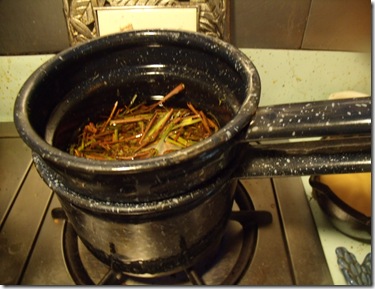
(A double boiler can be any sort of arrangement where you have a smaller pan that fits into a larger pan. The idea of one is to fill the bottom larger pan with water that is heated to a boil, while the smaller pan sits inside it holding the substance you are infusing or melting. They are wonderful for melting chocolate, wax or other things that if put directly on the source of heat, would either burn or possibly burst into flames! Care must be taken to not have the bottom pan have so much water in it that when boiling it splashes water into the upper pan though, so that is something to watch for. You must not walk away from a double boiler either, as vigilance must be maintained to make sure it does not boil dry!)
The elder bark was infused by this method for two hours, then strained through a piece of a clean old cotton pillow case, (use what you have folks! no need to go buy anything special). I let it cool a bit and then gave the cloth filled with this infused bark some good hard squeezes to get every bit out I could. The other half of the fresh bark was then placed in the top pan of the double boiler and the first infused oil was poured over this new bark and again, infused for two hours. (I did end up having to add a little bit more olive oil to the second batch to make sure the elder bark was covered.)

Double infused elder bark oil
Sarah recommends that when you are using fresh plant material, it is best to wait three days to make sure any water content separates out.
The next thing was to make a bruise salve out of the oil. Using the double boiler method again, I heated the double infused elder bark oil in one pan and melted beeswax in another. You could just grate the beeswax right into the warming oil, if you prefer.

The usual proportions used in salves is 1 ounce of melted beeswax to 8 ounces of warmed oil. I always work on a glass cutting board, so after the warmed oil and melted wax have been combined, I just put a bit on the glass, so it cools quickly, and I can see if I would like it either a bit firmer (add more wax) or a bit looser (add more oil). You can see my little test blob in this next picture

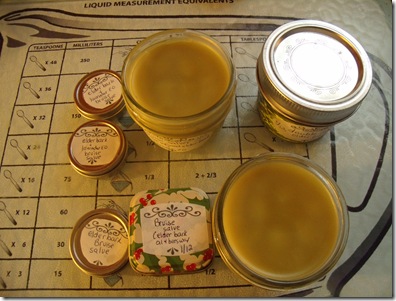
When you have the oil and beeswax in the proportions you like, just pour into containers to cool.
My friend Marci, had given me some lovely lavender essential oil, so I added a few drops to part of the salve, as lavender eo is good for bruising also. The other part I just left plain though, as I am curious to see how the elder bark plain does with bruising and I like the smell of it just fine plain. In fact, I thought it smelled wonderful while heat infusing on the stove top! I have never used elder bark before, myself, have you? You haven’t?! Would you care to? Leave me a comment letting me know if you prefer to try a tin with or without the lavender essential oil and I will draw a name Saturday and mail the winner a tin to try!
So just what is the structure and function of skin? And how does a bruise form?
Skin is our largest organ, covering approximately 20 square feet. It helps regulate our body temperature and allows us to have the sensations of heat, cold and touch. It helps protect us from the elements and microbes. It performs an essential role in respiration in the form of perspiration. Vitamin D synthesis also occurs here.
Skin is divided into three layers:
Epidermis – Outmost layer, creates our skin tone and a waterproof barrier (It might make you wonder when I said that skin is a waterproof barrier, how this salve will affect a bruise. Well skin might be a waterproof barrier, but it readily absorbs other things, like this oil/salve)
Dermis – Beneath the epidermis, contain hair follicles, sweat glands, and tough connective tissue
Hypodermis/Subcutaneous Tissue – The deepest layer, made from fat and connective tissue
Bruises form when small blood vessels under the skin tear or leak, most often caused by a bump or fall. Blood leaks into surround tissue, causing the black and blue color. As bruises (contusions) heal, they can change colors, as they heal, from purplish black, to reddish blue, or yellowish green. Initially, the bruise can appear quite red. It is the hemoglobin in the red blood cells, and the breakdown products of hemoglobin, that causes these colorful changes.
Most bruises are not cause for concern. You should be aware though, that if you have a severe bruise form, swelling and pain that begins within 30 minutes of an injury, you might have a sprain or fracture.
It is possible to get a bruise and not even remember what you did to cause it. As we age, we loose our some of the fat under our skin, causing it to be thinner and less flexible. This change, along with skin exposure, causes blood vessels to break easily. When blood vessels break, bruising happens.
Ladies are more prone to bruising than gentleman, especially in areas like the buttocks, upper arms and thighs. A tendency to bruise easily can even be a family trait.
Sometimes a bruise will travel in the direction of gravity, so a leg bruise might take longer to heal than one on the arm, for example.
Arnica , Calendula , and Comfrey are a few herbs which might also help heal a bruise. If you find you bruise easily, you might consider adding Bilberry to your diet. It helps strengthen and protect capillary walls, which makes it a good addition to help any bruise heal and to help prevent new ones.
Big Hugs to all who visit Comfrey Cottages xx

It peels quite easily and soon I had quite a bit peeled.
Next was to divide this peeled bark roughly into two piles.

Half went into the top pan of my double boiler with enough olive oil to well cover the bark. This smaller pan is fitted into a slightly larger pan, partially filled with boiling water.

(A double boiler can be any sort of arrangement where you have a smaller pan that fits into a larger pan. The idea of one is to fill the bottom larger pan with water that is heated to a boil, while the smaller pan sits inside it holding the substance you are infusing or melting. They are wonderful for melting chocolate, wax or other things that if put directly on the source of heat, would either burn or possibly burst into flames! Care must be taken to not have the bottom pan have so much water in it that when boiling it splashes water into the upper pan though, so that is something to watch for. You must not walk away from a double boiler either, as vigilance must be maintained to make sure it does not boil dry!)
The elder bark was infused by this method for two hours, then strained through a piece of a clean old cotton pillow case, (use what you have folks! no need to go buy anything special). I let it cool a bit and then gave the cloth filled with this infused bark some good hard squeezes to get every bit out I could. The other half of the fresh bark was then placed in the top pan of the double boiler and the first infused oil was poured over this new bark and again, infused for two hours. (I did end up having to add a little bit more olive oil to the second batch to make sure the elder bark was covered.)

Double infused elder bark oil
Sarah recommends that when you are using fresh plant material, it is best to wait three days to make sure any water content separates out.
The next thing was to make a bruise salve out of the oil. Using the double boiler method again, I heated the double infused elder bark oil in one pan and melted beeswax in another. You could just grate the beeswax right into the warming oil, if you prefer.

The usual proportions used in salves is 1 ounce of melted beeswax to 8 ounces of warmed oil. I always work on a glass cutting board, so after the warmed oil and melted wax have been combined, I just put a bit on the glass, so it cools quickly, and I can see if I would like it either a bit firmer (add more wax) or a bit looser (add more oil). You can see my little test blob in this next picture

When you have the oil and beeswax in the proportions you like, just pour into containers to cool.
My friend Marci, had given me some lovely lavender essential oil, so I added a few drops to part of the salve, as lavender eo is good for bruising also. The other part I just left plain though, as I am curious to see how the elder bark plain does with bruising and I like the smell of it just fine plain. In fact, I thought it smelled wonderful while heat infusing on the stove top! I have never used elder bark before, myself, have you? You haven’t?! Would you care to? Leave me a comment letting me know if you prefer to try a tin with or without the lavender essential oil and I will draw a name Saturday and mail the winner a tin to try!

So just what is the structure and function of skin? And how does a bruise form?
Skin is our largest organ, covering approximately 20 square feet. It helps regulate our body temperature and allows us to have the sensations of heat, cold and touch. It helps protect us from the elements and microbes. It performs an essential role in respiration in the form of perspiration. Vitamin D synthesis also occurs here.
Skin is divided into three layers:
Epidermis – Outmost layer, creates our skin tone and a waterproof barrier (It might make you wonder when I said that skin is a waterproof barrier, how this salve will affect a bruise. Well skin might be a waterproof barrier, but it readily absorbs other things, like this oil/salve)
Dermis – Beneath the epidermis, contain hair follicles, sweat glands, and tough connective tissue
Hypodermis/Subcutaneous Tissue – The deepest layer, made from fat and connective tissue
Bruises form when small blood vessels under the skin tear or leak, most often caused by a bump or fall. Blood leaks into surround tissue, causing the black and blue color. As bruises (contusions) heal, they can change colors, as they heal, from purplish black, to reddish blue, or yellowish green. Initially, the bruise can appear quite red. It is the hemoglobin in the red blood cells, and the breakdown products of hemoglobin, that causes these colorful changes.
Most bruises are not cause for concern. You should be aware though, that if you have a severe bruise form, swelling and pain that begins within 30 minutes of an injury, you might have a sprain or fracture.
It is possible to get a bruise and not even remember what you did to cause it. As we age, we loose our some of the fat under our skin, causing it to be thinner and less flexible. This change, along with skin exposure, causes blood vessels to break easily. When blood vessels break, bruising happens.
Ladies are more prone to bruising than gentleman, especially in areas like the buttocks, upper arms and thighs. A tendency to bruise easily can even be a family trait.
Sometimes a bruise will travel in the direction of gravity, so a leg bruise might take longer to heal than one on the arm, for example.
Arnica , Calendula , and Comfrey are a few herbs which might also help heal a bruise. If you find you bruise easily, you might consider adding Bilberry to your diet. It helps strengthen and protect capillary walls, which makes it a good addition to help any bruise heal and to help prevent new ones.
Big Hugs to all who visit Comfrey Cottages xx
Subscribe to:
Posts (Atom)